 Blog Home
Buying Signals: How to Spot and Act on Shopper Interest
Learn to identify and respond to buying signals that reveal when prospects are ready to purchase and how to close more sales effectively.
.webp)
Our most recent articles
Most merchants track traffic like it's a uniform resource, but a shopper scrolling past your homepage at 11pm is not the same as someone who just saved three items to a wishlist.
The difference between these behaviors is buying signals, observable actions that separate passive curiosity from active purchase consideration.
Without a system to identify and respond to these signals, high-intent shoppers slip through the funnel while brands waste budget re-acquiring visitors who already expressed interest. Buying signals are the critical layer between traffic metrics and conversion that determines whether demand turns into revenue or dissolves into noise.
This article teaches you how to recognize which signals matter, how to measure their strength, and how to automate responses that close the gap between interest and purchase.
What Are Buying Signals?
Buying signals are specific shopper behaviors that indicate elevated purchase probability. They are not engagement scores or time-on-site averages. They are direct actions proving a shopper has moved from passive discovery to active consideration.
The distinction matters because not all signals carry equal weight. A product page view is a signal, but it tells you almost nothing about commitment. A back-in-stock alert subscription is also a signal, but it reveals exactly what the shopper wants and when they're ready to act.
The strongest buying signals come from zero-party data, where the shopper explicitly declares their preferences. These actions require effort and intent. A shopper who creates a wishlist, subscribes to a restock notification, or saves a specific size and color is handing you a roadmap to their next purchase.
Behavioral signals like page views and session duration offer background noise. Declared intent signals like saves and alerts are the conversation itself. Understanding purchase intent starts with recognizing that passive observation can never replace explicit action.
The Spectrum of Buying Signals
Signal strength exists on a continuum from ambient awareness to purchase-ready commitment. Merchants who treat all signals equally waste resources chasing shoppers who were never serious.
Weak Signals: Passive Browsing
Product page views, homepage bounces, single-session visits, and short time-on-site all fall into this category. They indicate awareness but not purchase readiness.
A shopper who lands on a product page from a social ad and leaves after 15 seconds has not signaled buying intent. They might have clicked out of curiosity or misread the ad. These signals are useful for remarketing pools but should never be confused with demand.
Weak signals create the illusion of interest because they generate volume. Merchants see thousands of page views and assume there's latent demand, but most of those visits represent dead ends rather than paused journeys.
Medium Signals: Active Research
Repeat visits to the same product, comparison behavior across similar items, reading reviews, extended time on product pages, and adding items to cart without checkout all indicate consideration. The shopper is researching, but they have not committed.
Intent signals at this level show that the shopper is solving for something specific. They are comparing options, validating quality, and building confidence. This is the research phase of the buying cycle, not the decision phase.
The problem with medium signals is they often evaporate across sessions. A shopper who spends 10 minutes comparing two jackets on Monday might return on Wednesday with no memory of which option they preferred. Without a mechanism to preserve that research, the shopper starts over, and the signal is lost.
Medium signals are where intent begins to crystallize, but they require infrastructure to transition into action.
Strong Signals: Declared Intent
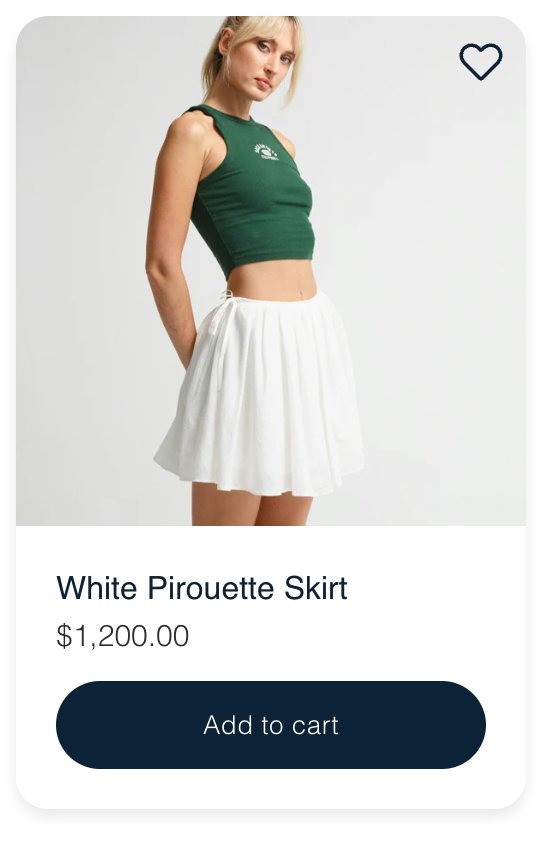
Wishlist adds, back-in-stock alert subscriptions, price drop alert requests, saved carts, shared wishlists, multiple list creation, and variant-level saves represent the highest tier of buying signals. These are zero-party data actions where the shopper explicitly tells you what they want.
A shopper who saves a product to a wishlist is declaring interest that extends beyond the current session. A shopper who subscribes to a restock alert for a specific size and color is telling you exactly what they will buy when conditions are right.
Strong signals correlate directly with conversion because they reflect decision-making, not exploration. The shopper has moved past comparison and committed to a preference. All that remains is timing, budget, or availability.
B2B vs. B2C Buying Signals
Buying signals function differently in B2B contexts. B2B signals include repeat account logins, bulk quantity requests, quote requests, and account-level saves.
The purchase cycle is longer, and signals often indicate committee-level interest rather than individual preference. A single login from a procurement manager might represent a multi-stakeholder decision process that spans weeks.
B2b buying signals require a different response framework because the buying journey is more complex and less linear. However, the principle remains the same: capture explicit declarations of interest and automate follow-up based on signal strength.
Why Most Merchants Miss High-Intent Signals
The visibility problem is architectural. Basic analytics platforms can track page views and bounce rates, but they cannot see what a shopper actually wants.
A merchant might know someone viewed a product five times, but they do not know if the shopper wanted the blue version in size medium or if they were waiting for a price drop. Without zero-party data capture, high-intent signals like product preference and restock interest remain invisible.
Signal tracking also breaks across devices. A shopper who saves an item on mobile but returns on desktop appears as two separate low-intent sessions rather than one continuous high-intent journey. This fragmentation makes strong signals look weak and hides the true depth of shopper commitment.
The extended purchase window compounds the problem. Data shows that how long shoppers take to buy often stretches across 41 days, with multiple sessions and device switches along the way. Single-session analytics cannot track this kind of journey.
Third-party cookie restrictions have made the problem worse. Merchants can no longer follow shoppers across the web, which means the only reliable way to track intent is through explicit, consented actions on your own site.
Without infrastructure to capture and preserve declared intent, merchants are functionally blind to their highest-value traffic.
How to Capture Buying Signals
1. Build Zero-Party Data Infrastructure
Implement features that allow shoppers to declare their preferences. Wishlists, save-for-later, alert subscriptions, and gift registries are not just user experience improvements. They are the primary mechanism for generating actionable buying signals.
These tools work because they require explicit shopper action. A shopper who takes the time to save a product, subscribe to an alert, or create a list is volunteering information about what they intend to buy. That data is immune to privacy regulations because it is voluntarily shared.
2. Enable Cross-Device Sync
A buying signal is worthless if it disappears when the shopper switches devices. Saved preferences, lists, and alerts must follow the shopper from mobile to desktop to in-store.
This continuity transforms weak signals into strong ones. A single mobile view becomes a saved item revisited across three sessions, which paints a clear picture of sustained interest.
Without cross-device sync, merchants see fragmented low-intent behavior when the reality is a single high-intent journey spread across multiple touchpoints.
3. Track at the Variant Level
Generic product interest is not actionable. Capture the specific size, color, and configuration the shopper wants.
This precision allows for targeted response. Back in stock alerts only trigger when the exact variant restocks, not when a different size becomes available. The shopper receives relevant notifications, and the merchant avoids sending alerts that do not match the shopper's actual preference.
Variant-level tracking is the difference between knowing someone liked a jacket and knowing they want the olive green version in size large. Only the latter is actionable.
How to Act on Buying Signals
1. Automate High-Intent Triggers
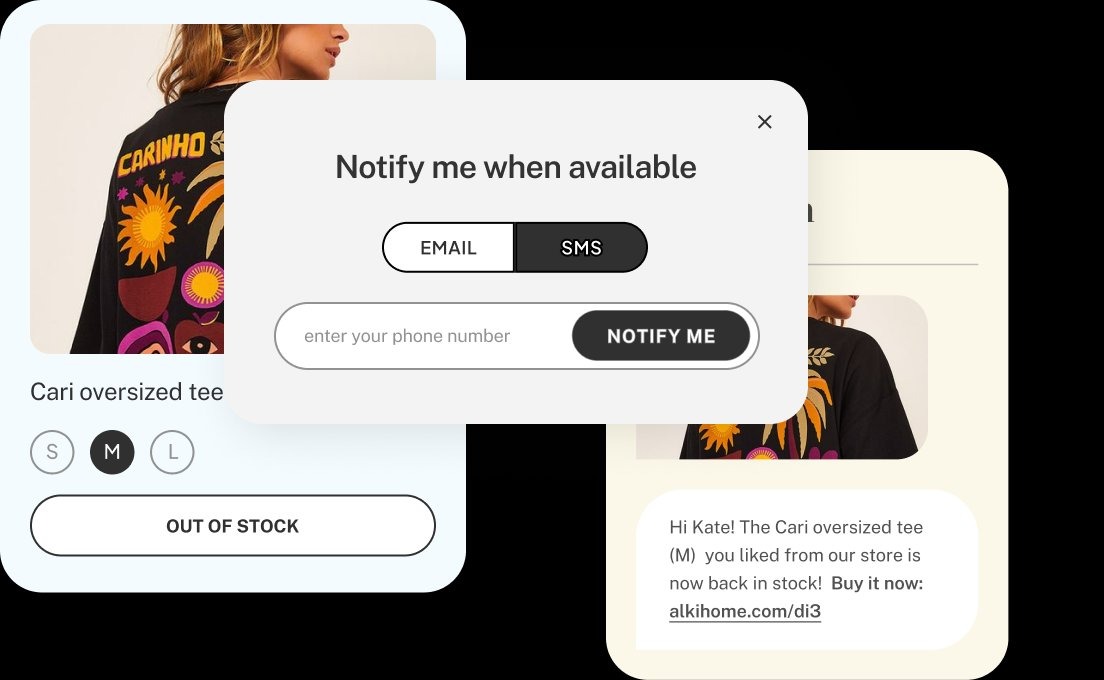
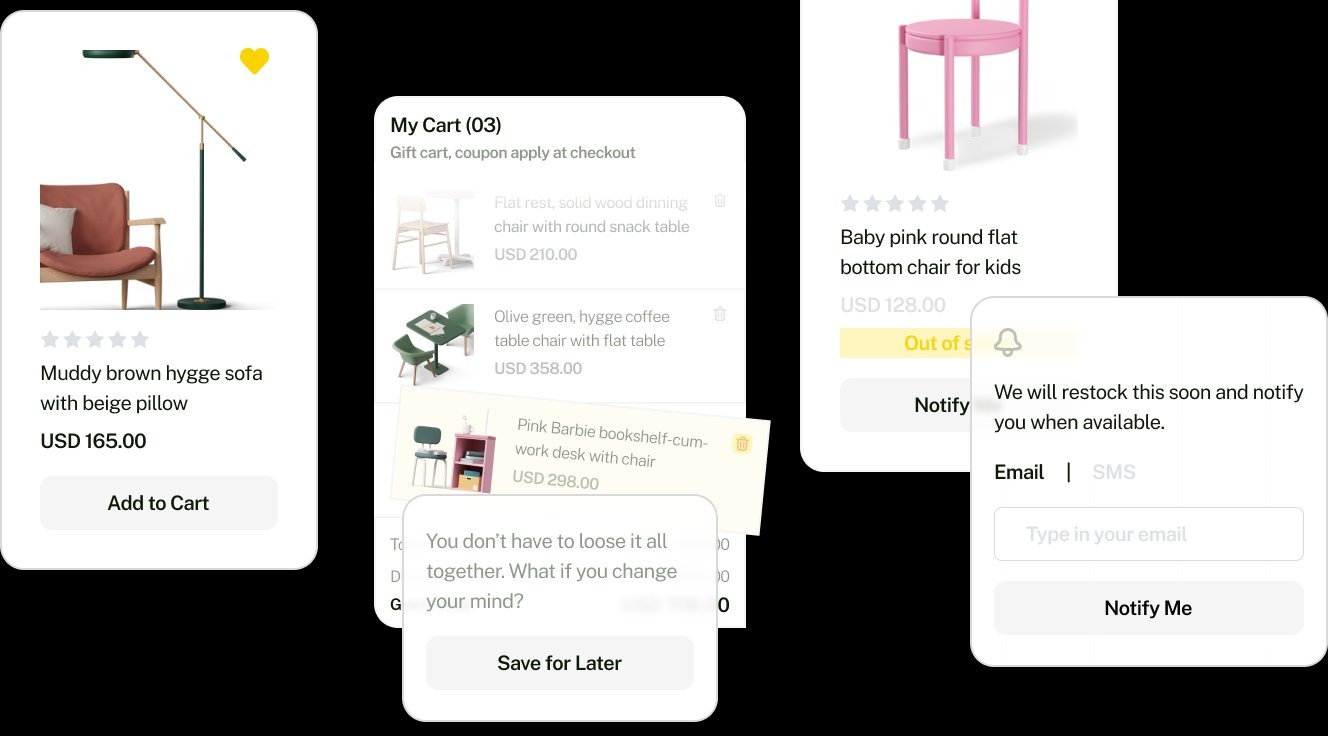
Once a strong signal is captured, the response must be immediate and automatic. Back-in-stock alerts for out-of-stock saves, price drop notifications for wishlisted items, and wishlist reminders for saved but unpurchased products all act as re-engagement triggers that convert demand into revenue.
They are personalized, high-relevance messages triggered by the shopper's own declared interest. A shopper who subscribed to a restock alert three weeks ago will receive a notification the moment the item is available, pulling them back into the funnel at the exact moment purchase is possible.
This is where latent shopper intent converts into measurable revenue. The shopper already signaled what they wanted. Automation closes the loop by telling them when they can act.
These triggers work around the clock without additional ad spend. The infrastructure operates as a 24/7 sales assistant, responding to every high-intent signal the moment conditions align.
2. Segment by Signal Strength
Not all buying signals deserve the same response. Shoppers who have saved three items and subscribed to two alerts are far more valuable than shoppers who viewed a product once.
Use signal data to create prioritized segments for marketing, remarketing, and personalized site experiences. High-intent signal shoppers should receive different treatment than casual browsers because their likelihood to convert is measurably higher.
Segmentation based on declared intent allows you to allocate resources where they matter most. A shopper with multiple saved items and active alerts is worth more attention than someone who bounced after a single page view.
3. Use Signals to Optimize Ad Spend
Instead of broad remarketing to all site visitors, use buying signals to create hyper-targeted lookalike audiences. A shopper who saved an item but did not buy is a far better remarketing target than someone who bounced after 10 seconds.
Equally important is knowing when to suppress ads. A shopper who has already subscribed to a back-in-stock alert has explicitly told you they want the product. Retargeting them with ads is wasted budget because they are already in your funnel.
The ability to turn window shoppers into buyers depends on identifying which window shoppers are actually researching a purchase versus which ones are killing time.
Signal-based ad optimization reduces spend on low-intent traffic and concentrates budget on shoppers who have already demonstrated purchase readiness.
4. Measure the Impact of Buying Signal Capture
Attribution should track the revenue generated from shoppers who engaged with signal-capture features versus shoppers who did not. The gap between these two groups reveals the value of your infrastructure.
Merchants should measure conversion rate of signal-engaged shoppers compared to general site visitors, average order value lift for shoppers with saved items, revenue attributed to triggered alerts, and time-to-purchase reduction for shoppers with captured intent.
Swym's 2025 impact offers a real-world benchmark. Merchants using the platform recovered $1.14 billion in revenue from signal-engaged shoppers. And the data consistently shows that shoppers who engage with intent-capture features spend 15% to 25% more per order than the average site visitor.
Buying Signals Are the Bridge Between Traffic and Revenue
Traffic is not the problem. Most merchants have enough visitors. The problem is that they cannot tell which visitors are ready to buy and which are just passing through.
Buying signals solve this by making intent visible and actionable. The difference between a casual browser and a high-intent shopper is observable through explicit actions like saves, alerts, and list creation.
Merchants who build infrastructure to capture these signals turn browsing into revenue without increasing ad spend. The opportunity is already in your traffic. You just need the tools to see it.
Swym is purpose-built to capture and activate buying signals that other platforms treat as noise. Our platform tracks variant-level preferences, syncs intent across devices, and triggers automated responses when conditions change.
Capture the Products your Shoppers Truly Love
Swym Wishlist Plus lets shoppers save products they love, ensuring valuable customer intent is never lost and ready to convert.