

Here’s a pattern we see constantly: a shopper lands on your store, browses several products, maybe even spends a few minutes comparing options and then leaves without saving a single thing. Not because they weren’t interested. Saving products simply didn’t occur to them while they were exploring.
Capturing Shopper Intent Before It Disappears
Published April 2026
Most shoppers don’t buy on their first visit. Across millions of shopper journeys, we’re seeing that it can take weeks sometimes around 40 days from a shopper’s first visit to the moment they actually complete a purchase.
That gap between browsing and buying isn’t empty. It’s filled with intent product pages viewed, items compared, tabs left open. The problem is, most of that intent goes uncaptured. Shoppers leave, life gets in the way, and by the time they’re ready to buy, they can’t find what they were looking at.
This means the real opportunity for merchants isn’t just driving more traffic to the top of the funnel. It’s capturing intent early knowing what shoppers want and who they are so you can bring them back when they’re ready to convert.
This month, we focused on helping you:
Here’s a pattern we see constantly: a shopper lands on your store, browses several products, maybe even spends a few minutes comparing options and then leaves without saving a single thing. Not because they weren’t interested. Saving products simply didn’t occur to them while they were exploring.
The real cost shows up later. When that shopper is ready to buy, maybe a few days later, maybe a few weeks later they remember liking something but can’t find it again. They retrace their steps, search around, and often give up entirely. That’s lost revenue from a shopper who was already interested.
To solve this, we’ve built a Wishlist Education Module. It’s a gentle, contextual nudge that appears while shoppers are browsing, encouraging them to save products they’re looking at. It doesn’t interrupt the shopping experience, it enhances it by teaching shoppers that saving is an option.
The moment a shopper saves a product, two valuable things happen: you capture their intent (what they want) and their identity (who they are). Anonymous browsers become known, high-intent shoppers you can bring back and convert through email, SMS, or any remarketing channel you’re already using.
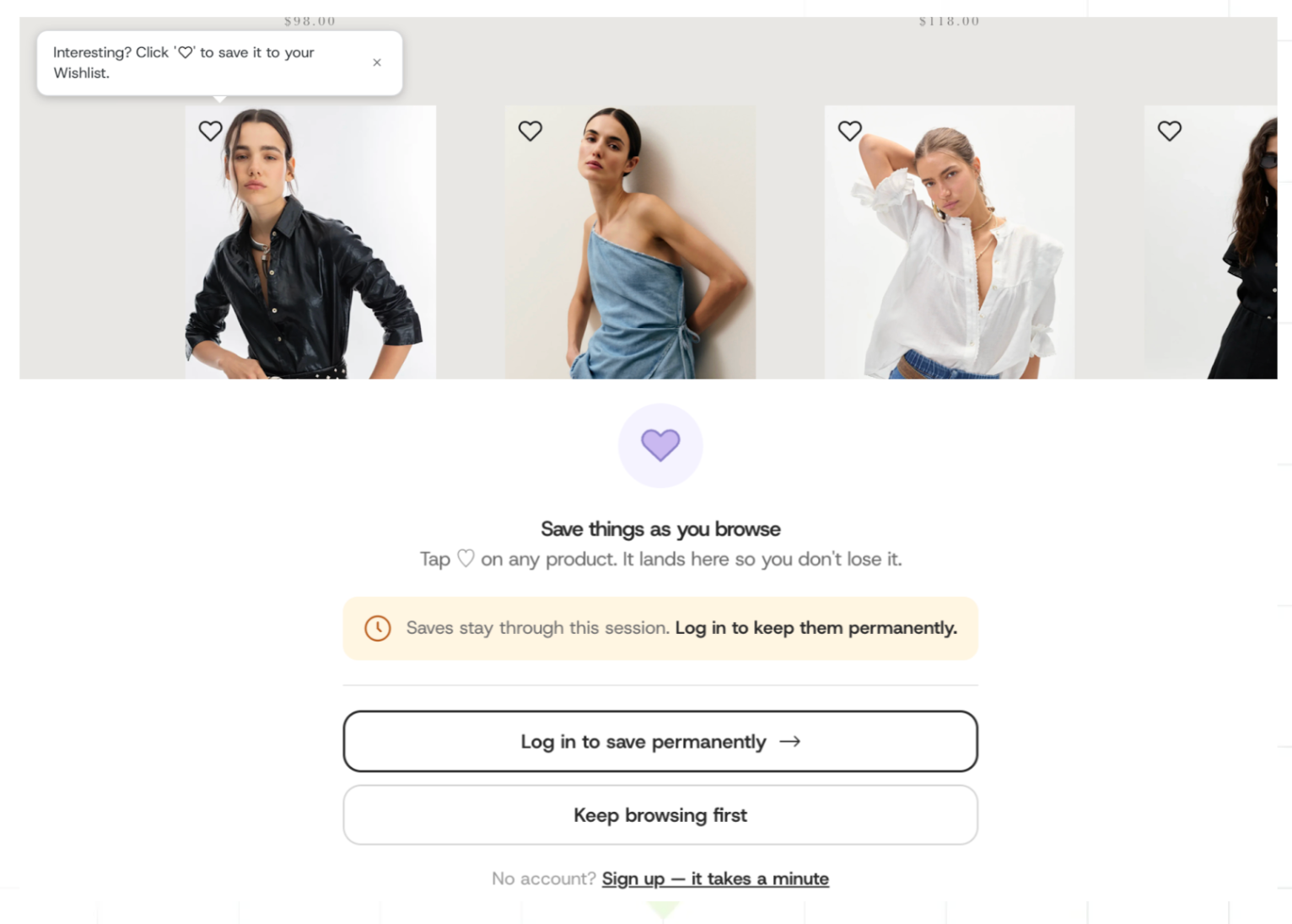
Why this matters: Every shopper who saves a product is giving you explicit permission to re-engage
them with something they’ve already shown interest in. That’s a fundamentally different and more effective starting point than cold remarketing.
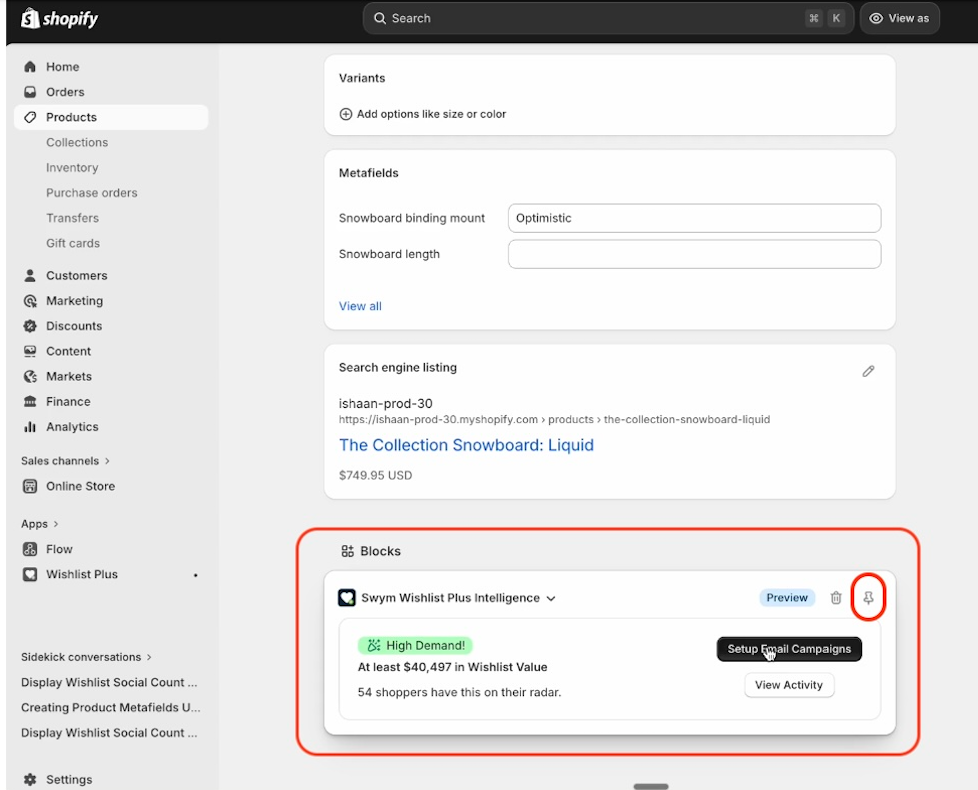
Wishlist data is no longer something you have to go looking for. It now shows up directly on your Shopify product pages.
You’ll see:
What this means for you: You can make better merchandising, pricing, and inventory decisions, without switching tools.
Browse abandonment flows are one of the most widely used automations in ecommerce. The concept is simple: if a shopper visits a product page and leaves without buying, send them a follow-up. The problem? That net is cast way too wide. A single product page view doesn’t reliably indicate purchase intent. You end up sending the same messages to casual browsers and serious buyers alike, which dilutes your conversion rate and can fatigue your audience.
Frequently Browsed takes a different approach. Instead of triggering on a single visit, it fires only when a shopper returns to the same product multiple times without buying. They didn’t save it to their wishlist, but they keep coming back to look at it. That’s a much stronger purchase signal than a one-time page view; it suggests the shopper is actively considering a purchase but hasn’t pulled the trigger yet.
Because the qualifying behavior is more specific, the segment is smaller but far more relevant. That means your messaging hits harder, your conversion rates go up, and you’re not wasting sends on people who were never going to buy.
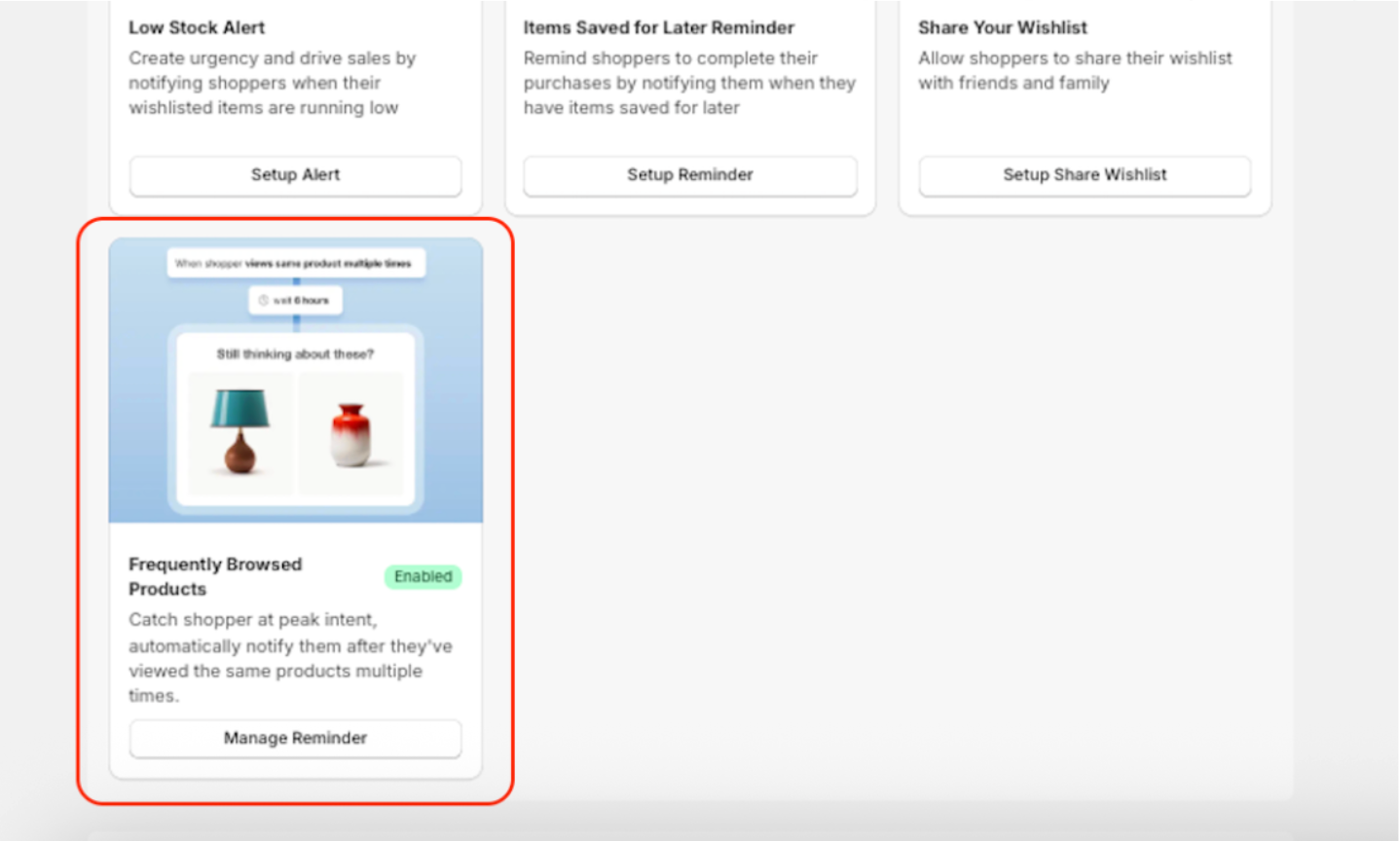
Why this matters: Smaller, more qualified segments lead to more relevant messaging and significantly higher conversion than standard browse abandonment. It’s not about reaching more people, it's about reaching the right people at the right moment.
Most merchants set up their wishlist once enabling the basics, getting the button on the storefront and then move on. It makes sense; there’s always something else demanding attention. But over time, new features ship, new integrations become available, and the gap between what you’re using and what’s possible quietly widens.
We’ve added a built-in AI assistant to your Swym dashboard, the Swym AI Assistant that acts as a setup advisor. It reviews your current configuration and proactively surfaces what you’re missing: features that aren’t enabled, integrations that aren’t connected, automations that could be driving revenue but aren’t turned on yet.
Think of it as a second pair of eyes on your setup. It doesn’t just list what’s available, it tells you what matters most based on your specific configuration and the tools you’re already using. If you’re on Klaviyo but haven’t enabled wishlist-based email triggers, the assistant will flag that. If you have price drop alerts available but haven’t set them up, it’ll surface that opportunity.
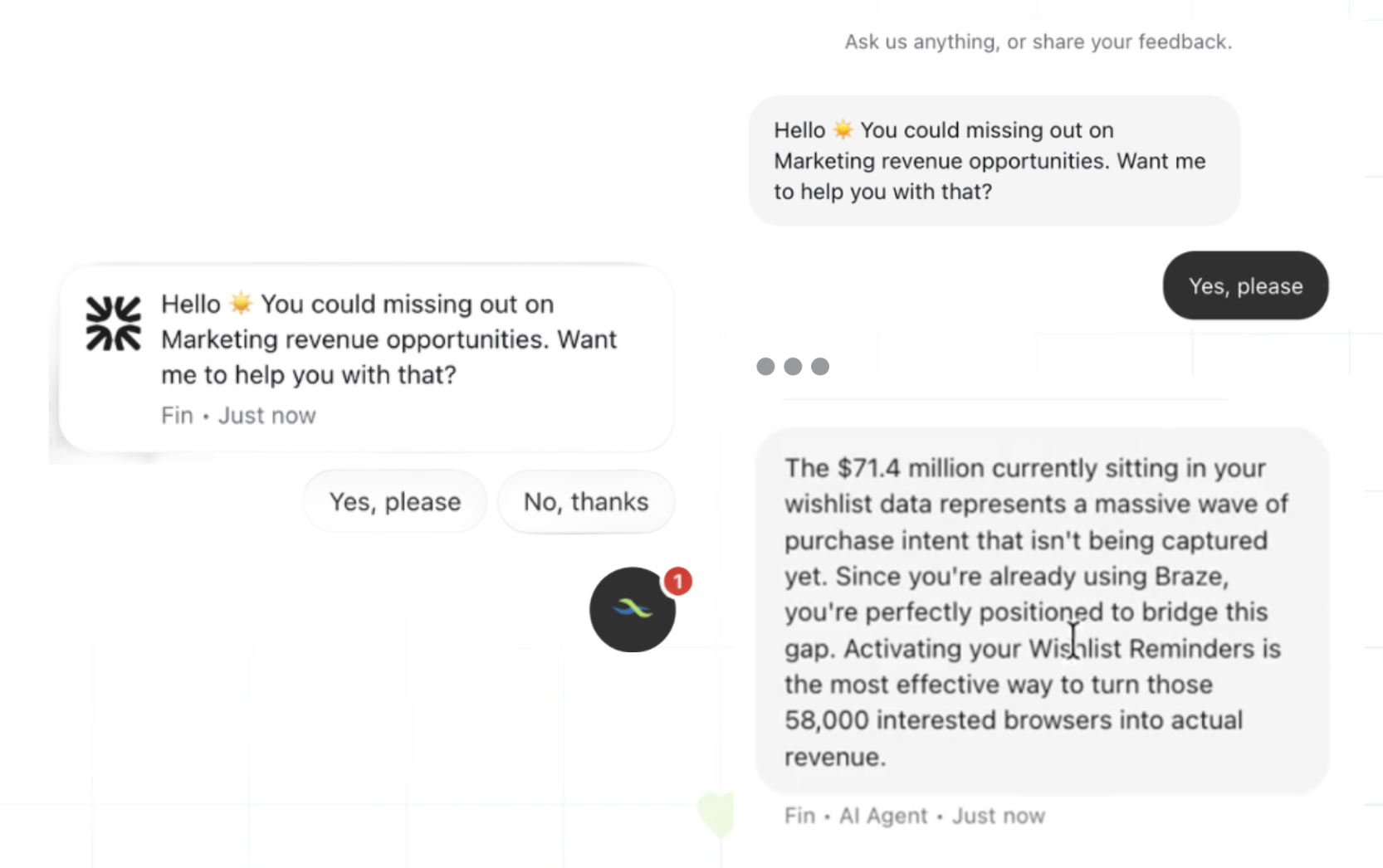
The Swym AI Assistant proactively surfaces revenue opportunities based on your current setup
Why this matters: You don’t have to audit your own setup or keep track of every new release. The assistant does that for you, so you can focus on running your store while making sure you’re getting the full value of the tools you’re already paying for.


If you sell to shoppers in the EU or EEA, you’ve likely experienced this: a shopper lands on your store, sees the cookie consent banner, and either declines or simply ignores it. Previously, that meant the wishlist wouldn’t load at all. The shopper couldn’t save products, and you lost their intent entirely not because they weren’t interested, but because of a compliance wall.
We’ve rebuilt how the wishlist handles cookie consent so that it now loads regardless of the shopper’s consent choice. Shoppers can save products right away, and those saves are stored locally in their browser. When they log in or create an account later, everything carries over seamlessly.
This is a meaningful change for any merchant with European traffic. You stay fully compliant with GDPR and ePrivacy regulations; no data is processed without consent while still giving shoppers the ability to use the wishlist from the moment they arrive. It removes the friction without compromising on privacy.
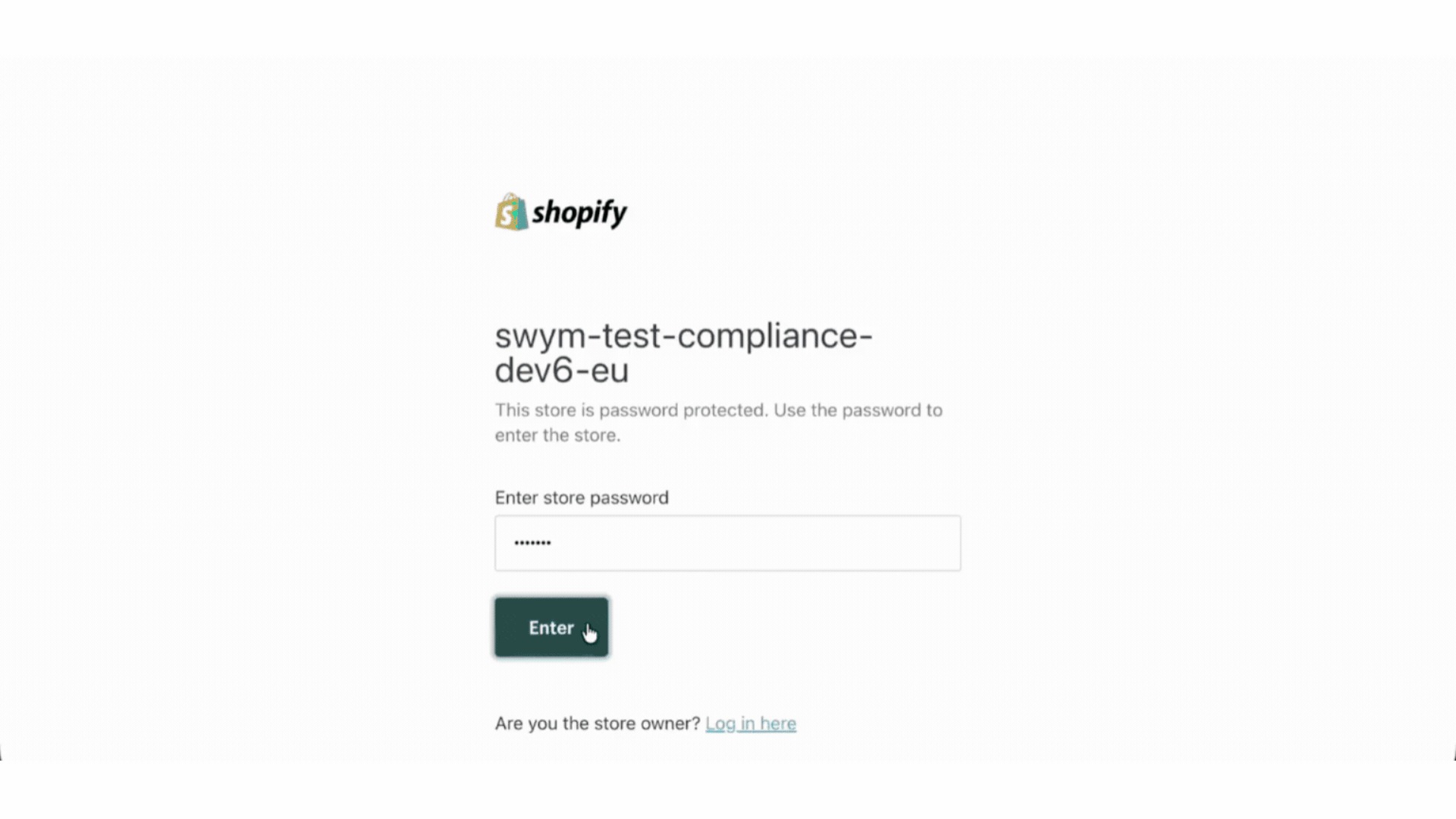
The wishlist now loads for EU and EEA shoppers regardless of their cookie consent choice.
What this means for you: You stop losing high-intent shoppers at the cookie wall. Compliance and conversion are no longer in conflict; you get both.
We’ve published a comprehensive report based on data from millions of shopper journeys. It breaks down the real timelines behind how shoppers move from research to purchase when they’re in discovery mode versus when they’re genuinely ready to buy, how long purchase intent persists before it fades, and where the biggest re-engagement opportunities lie in that window.
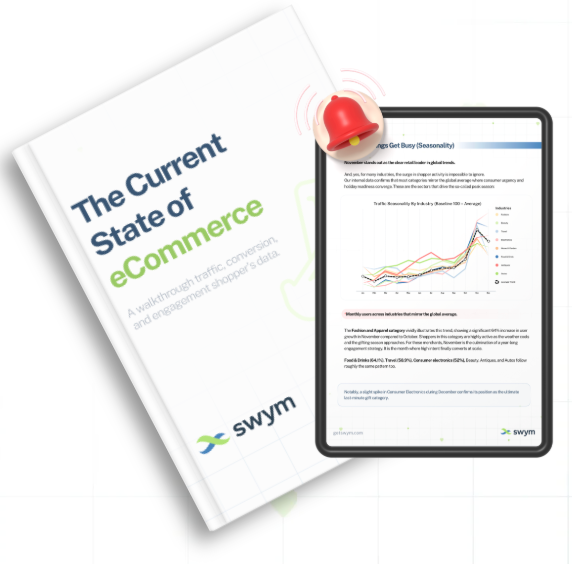
If you’re running email, SMS, or paid remarketing campaigns, this report will help you time your outreach for maximum impact. Instead of guessing when to follow up, you’ll have data-backed guidance on the windows that matter most.
Ready to use Shopify Flow playbooks
We’ve created a set of ready-to-use Shopify Flow playbooks for the most common wishlist automation scenarios. Whether you want to trigger emails when a wishlisted item drops in price, goes back in stock, or runs low on inventory, there’s a playbook you can pick up and deploy without building anything from scratch. Find the ones that match your setup and go.
Wishlist Plus Accessibility Report
If your customers or procurement teams require compliance documentation, we’ve got you covered. Wishlist Plus is built to WCAG 2.1 Level AA standards, and we’ve published a full Accessibility Conformance Report covering screen reader support, keyboard navigation, and EU privacy handling. It’s ready to share with anyone who needs it.
If you’ve already set up Swym, now is a great time to revisit your setup—there’s likely more revenue you can unlock from what’s already live.
If you want help with flows, triggers, or setup, just reply to this email—we’ll help you get it done.
Helping e-commerce brands craft a more seamless experience for their customers


