 Blog Home
How to Increase Average Basket Size Without Losing Money
Understand what average basket size (ABS) is and why it matters. Discover 5 strategies to improve basket density and lift your store revenue.

Our most recent articles
Most ecommerce metrics feel like a scorecard, but average basket size functions more like a revenue engine.
While traffic and conversion rates get the most attention, the density of each transaction determines the true efficiency of your store.
High-volume traffic often masks a significant problem: the hit-and-run shopper who buys a single item and disappears.
Getting a customer to commit to a second or third product in a single session is often more profitable than acquiring a brand-new visitor.
Lifting your basket size requires a shift in how you view the customer journey. It is no longer about forcing a quick sale. It is about respecting the research phase and helping shoppers curate their perfect collection over time.
This guide breaks down exactly why ABS metric is the key to sustainable growth and how you can start building bigger baskets by capturing the signals your shoppers are already leaving behind. Let’s dive in!
What is Average Basket Size?
Average basket size (ABS) refers to the number of items sold in a single transaction. It tells you exactly how much value you are extracting from a shopper once they decide to buy.
This metric is a direct reflection of your store’s ability to surface relevant products and reduce the friction of discovery.
In the industry, terms like UPT (Units per Transaction) and IPT (Items per Transaction) are often used interchangeably. All these metrics are essentially the same.
While many merchants obsess over traffic or conversion rates, basket size measures the depth of each sale. In a landscape where customer acquisition costs are rising, getting a customer to add a second or third item to their cart is often more profitable than finding a completely new buyer.
High basket density indicates that your brand successfully moved the shopper from a single-item hit-and-run purchase to a curated, multi-item experience.
Why This Metric Matters for Growth
Average basket size is the primary engine behind Average Order Value (AOV).
Data shows that users who engage with intent-capturing features like wishlisting spend 15% to 25% more per order than the average site visitor. This isn't just because they buy more expensive things. It is because they have larger baskets at the point of checkout.
Download the full report to equip yourself with all the necessary insights for a successful all-year-long strategy.
At the same time, increasing your average basket sizes reduces the proportional cost of shipping and fulfillment per item. So that’s a win-win.
Let’s unveil now a few strategies to improve your ABS (Average Basket Size) without compromising margins!
3 Simple Strategies to Improve Your Average Basket Size
Improving this metric requires more than just "frequently bought together" widgets.
It requires a system that respects the shopper's timeline and allows them to build their basket over multiple sessions. Here’s what you should do:
1. Enable Intent-Based Curated Lists
Shoppers often use your site to plan their future purchases.
By allowing them to create multiple wishlists for different events or categories, you encourage them to bundle items. A shopper who saves a primary product along with three accessories is far more likely to buy the entire "bundle" when they are ready to commit.
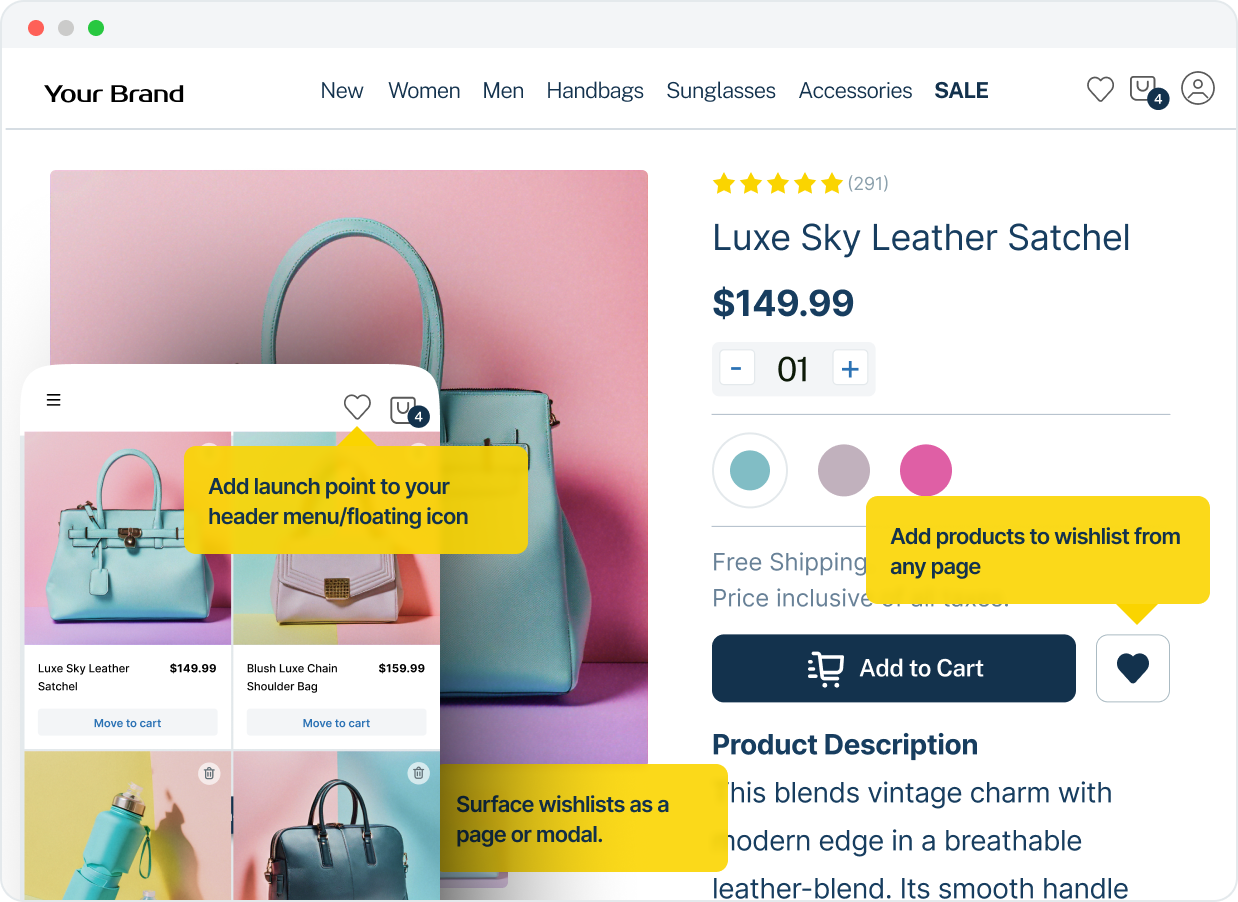
Shoppers have already done the work of curating their preferences for size and color, they just have to hit “buy” when they are ready.
Now, here’s the catch.
Continuity is necessary for basket growth.
If a shopper adds three items to a list on their phone but finds an empty screen when they switch to their laptop, the basket size resets to zero.
Providing cross-device accessibility ensures users can pick up exactly where they left off, even in store.
2. Implement a Save for Later Feature
Cart abandonment is often just a sign that a shopper is managing their budget even when most brands see it as failure.
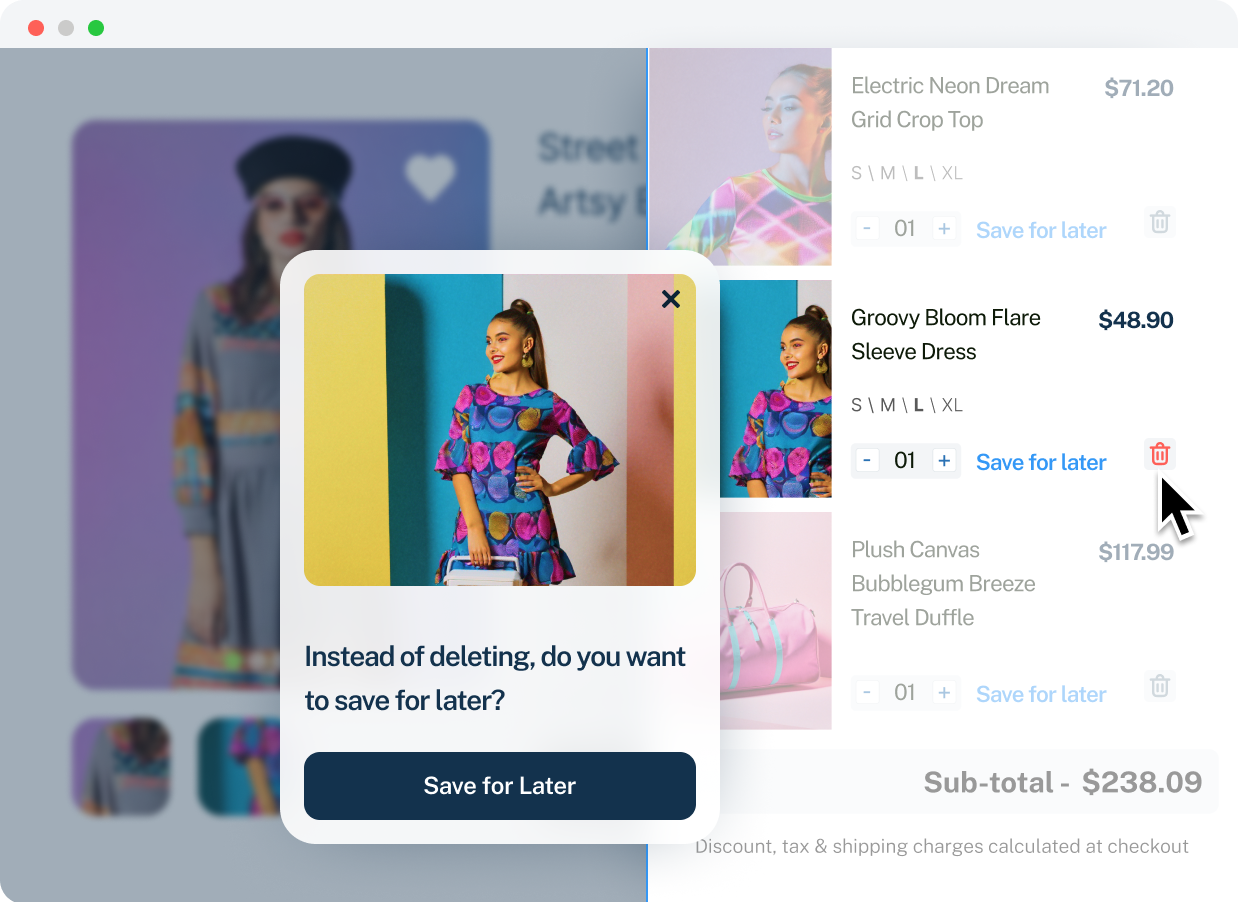
Instead of letting them delete an item and forget it, offer a "Save for Later" option directly in the cart. This keeps the item top-of-mind without the pressure of an immediate purchase.
When the shopper returns to finish their order, those saved items are easily moved back into the active basket, eventually increasing the total item count.
3. Use High-Intent Triggered Alerts
The average customer journey takes about 41 days.
Automated reminders for back-in-stock items or price drops on wishlisted products act as a magnet.
When a shopper returns via an alert for one item, they often browse their existing wishlist and add 2 or 3 other saved items to the transaction.
This strategy helped Swym merchants recover $1.14 billion in revenue in 2025 by simply reminding shoppers about the baskets they had already started building.
Increasing your ABS with Swym
Average basket size is a window into your customer’s intent.
It proves that shoppers are willing to buy more if the process of discovery and curation is frictionless.
Swym's platform excels at capturing subtle but powerful signals of intent, which are often overlooked indicators of latent demand.
By continuously monitoring and analyzing user behavior across various touchpoints, Swym identifies intent signals that reveal what a customer might buy.
This proactive capture of intent is crucial because it allows businesses to act on this latent demand before the customer's interest fades or they turn to a competitor.
Focus on helping your customers build their perfect basket over time, and the revenue growth will follow.
Capture the Products your Shoppers Truly Love
Swym Wishlist Plus lets shoppers save products they love, ensuring valuable customer intent is never lost and ready to convert.