 Blog Home
Purchase Intent: How to Capture and Convert It
Learn how to identify and capture purchase intent signals, then convert high-intent buyers into customers with proven targeting strategies.

Our most recent articles
Most brands are stuck in an expensive loop, paying to acquire traffic they already earned.
The mechanics are simple. A shopper discovers your product through an ad, browses your site, and leaves without buying. Three weeks later, you serve them another ad for the same product. You're not acquiring a new customer. You're re-buying attention you already had because you failed to capture the first signal of interest.
This guide shows how to break that cycle by treating purchase intent as infrastructure rather than a tactic. The brands winning in 2026 are those who capture early signals, preserve them across devices and sessions, and activate them through automated triggers that respect a longer journey.
What Is Purchase Intent?
Purchase intent is the measurable likelihood that a shopper will complete a transaction, expressed through explicit actions and implicit behaviors that accumulate over time.
The distinction between explicit and implicit signals defines how predictive your data actually is.
Explicit intent requires deliberate action from the shopper. A wishlist save is explicit. A back-in-stock subscription is explicit. A gift registry add is explicit. These actions carry weight because they cost the shopper effort and attention. They represent a conscious decision to bookmark a product for future consideration or purchase.
Implicit intent is observational. Multiple views of the same product suggest interest. Extended session time on a category page implies research behavior. Cart additions without checkout indicate hesitation, not disinterest.
The gap between the two is reliability. Implicit signals require interpretation. Explicit signals require activation. Understanding purchase intention as a spectrum of clarity helps you prioritize where to invest in capture mechanisms.
Merchants who treat all traffic the same are blind to this hierarchy. A shopper who saves three items to a wishlist is fundamentally different from one who bounced after 14 seconds on your homepage, yet most attribution models collapse both into the same "non-converting visitor" bucket.
Why Purchase Intent Matters More Than Traffic
Acquiring a new customer costs 5 to 7 times more than converting an existing high-intent visitor, yet most brands allocate 80% of their budget to the former.
The economic logic is broken. You're spending to fill the top of a funnel that leaks because you have no mechanism to capture and nurture the interest that already exists inside your site. The result is a traffic treadmill where growth in sessions rarely translates to proportional growth in revenue.
The average purchase window for ecommerce is 41 days from first visit to final purchase. During that window, shoppers interact with your brand across 6 to 8 different touchpoints, switching between devices, channels, and contexts. If your attribution model only tracks 24 hours, you're missing 97% of the story.
The brands that close this gap stop chasing cold traffic and start treating latent shopper intent as their most underutilized asset. They recognize that the person who saved a product two weeks ago is a warmer lead than someone clicking a prospecting ad for the first time.
Intent-based strategies reduce wasted spend by shifting budget from acquisition to activation. You're not abandoning top-of-funnel growth. You're acknowledging that most of your current traffic is already expressing intent if you have the tools to see it.
The Anatomy of Purchase Intent Signals
Not all signals carry the same weight. The difference between a passive page view and an active wishlist save is the difference between curiosity and commitment.
Low-Intent Signals
These are the baseline behaviors that indicate exploration without investment.
An anonymous page view tells you almost nothing. The visitor could be a bot, a competitor doing reconnaissance, or a shopper who landed on the wrong product through a broad keyword match. Single-session visits that end in a bounce after one product view represent the lowest tier of intent because there's no evidence of deliberation or return interest.
Email signups for a general newsletter are marginally better but still low-intent if they're incentivized with a blanket discount. The shopper is optimizing for savings, not expressing preference for specific products.
Medium-Intent Signals
These behaviors suggest active consideration but lack the commitment of explicit declaration.
Repeat visits to the same product indicate research behavior. A shopper who views the same item three times over five days is clearly deliberating, but you don't know what's blocking the purchase. Is it price sensitivity? Stock availability? Fit uncertainty? The signal is present but ambiguous.
Add-to-cart actions without checkout are stronger. The shopper took a transactional step, which implies readiness, but something in the final stage created friction. This could be unexpected shipping costs, a missing payment method, or simply a budget constraint that requires waiting until next payday.
High-Intent Signals
This is where prediction becomes reliable. Intent signals at this tier carry explicit commitment.
Wishlist saves are the gold standard. A shopper who bookmarks a product is telling you exactly what they want, which variant they prefer, and when they're considering the purchase. This is zero-party data at its purest because it requires effort and implies future action. Shoppers who engage with wishlist features convert at 31%, nearly 10 times the site average.
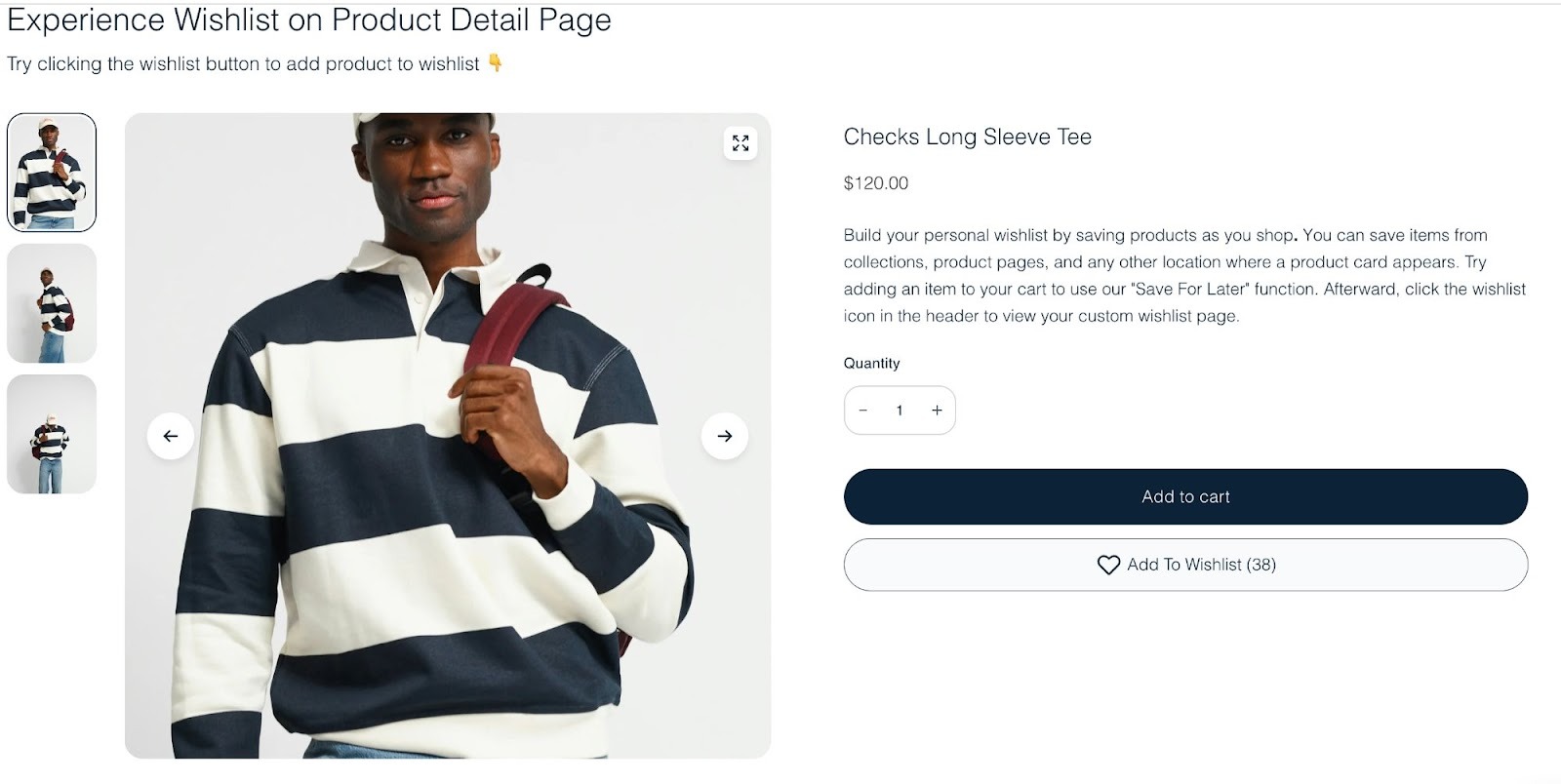
Back-in-stock alert subscriptions turn disappointment into opportunity. When a shopper requests a notification for an out-of-stock item, they're volunteering their contact information and declaring intent to buy when availability changes. These alerts generate a median of $63 in revenue per notification because the audience is self-selected for readiness.
Price drop alert requests reveal sale sensitivity without requiring immediate purchase. The shopper is saying, "I want this product, but not at this price." You now have a trigger condition and a committed audience. Buying signals like these are transactional commitments waiting for the right activation moment.
Multi-item list curation signals basket density potential. A shopper who saves five products across two categories is planning a larger purchase and likely researching how items work together. This behavior predicts higher average order value and stronger lifetime value because the shopper is treating your brand as a destination rather than a single-product stop.
Cross-device session continuation is less about intent strength and more about continuity, but it matters because it prevents intent from resetting to zero. If a shopper saves items on mobile and returns on desktop to complete the purchase, that's not two separate low-intent sessions. That's one high-intent journey successfully preserved.
How to Capture Purchase Intent Across the Shopper Journey
Capture is a multi-stage process that mirrors the natural rhythm of how people actually shop.
Stage 1: Discovery and Research (Days 1-14)
Enable frictionless saving. Shoppers in research mode need a way to bookmark products without the pressure of checkout.
Wishlist functionality acts as the bridge between "interesting" and "buying." It's the digital equivalent of folding the corner of a catalog page or walking past a store window twice. The action itself costs almost nothing in effort, but it creates a durable record of preference that survives session expiration and device switching.
Save actions are zero-party data goldmines. They tell you exactly which product, which variant, and which shopper. You now know that User A is interested in the navy blue sofa in size large, not the gray one in medium. That specificity allows for variant-level personalization and restock targeting that generic retargeting campaigns can never match.
The capture mechanism must be visible but unobtrusive. A persistent heart icon on product cards or a clear "Add to Wishlist" button on product pages lowers friction.
If the shopper has to hunt for the feature or authenticate before using it, adoption drops. How to measure purchase intent during this stage is straightforward: track save rates per product, per category, and per traffic source to identify which parts of your catalog generate the strongest early signals.
Stage 2: Consideration and Comparison (Days 15-30)
Maintain continuity across devices. If a shopper saves three items on mobile during their commute but finds an empty list on desktop at lunch, the intent signal dies.
Cross-device sync is the retention mechanism that prevents leakage. Modern shoppers don't complete purchases in a single sitting on a single device. They research on mobile while commuting, compare options on desktop at work, and finalize purchases on a tablet at home. If each session starts from zero, you're forcing them to rebuild their consideration set manually. Most won't bother.
Continuity also extends to in-store experiences. A shopper who saves items online and then visits your physical location should be able to access their wishlist via Shopify POS. This closes the loop between digital discovery and physical fulfillment, which is particularly valuable for categories like furniture, apparel, or home improvement where tactile evaluation matters.
The technical requirement is straightforward: account-based syncing that persists across browsers, devices, and platforms. Guest users should have the option to sync via email or SMS without forcing account creation. How to measure purchase intent during this stage involves tracking cross-device engagement rates and measuring how often saved items are accessed on a different device than where they were originally added.
Stage 3: Decision and Conversion (Days 31-41)
Trigger automated re-engagement based on the captured intent. This is where signals turn into revenue.
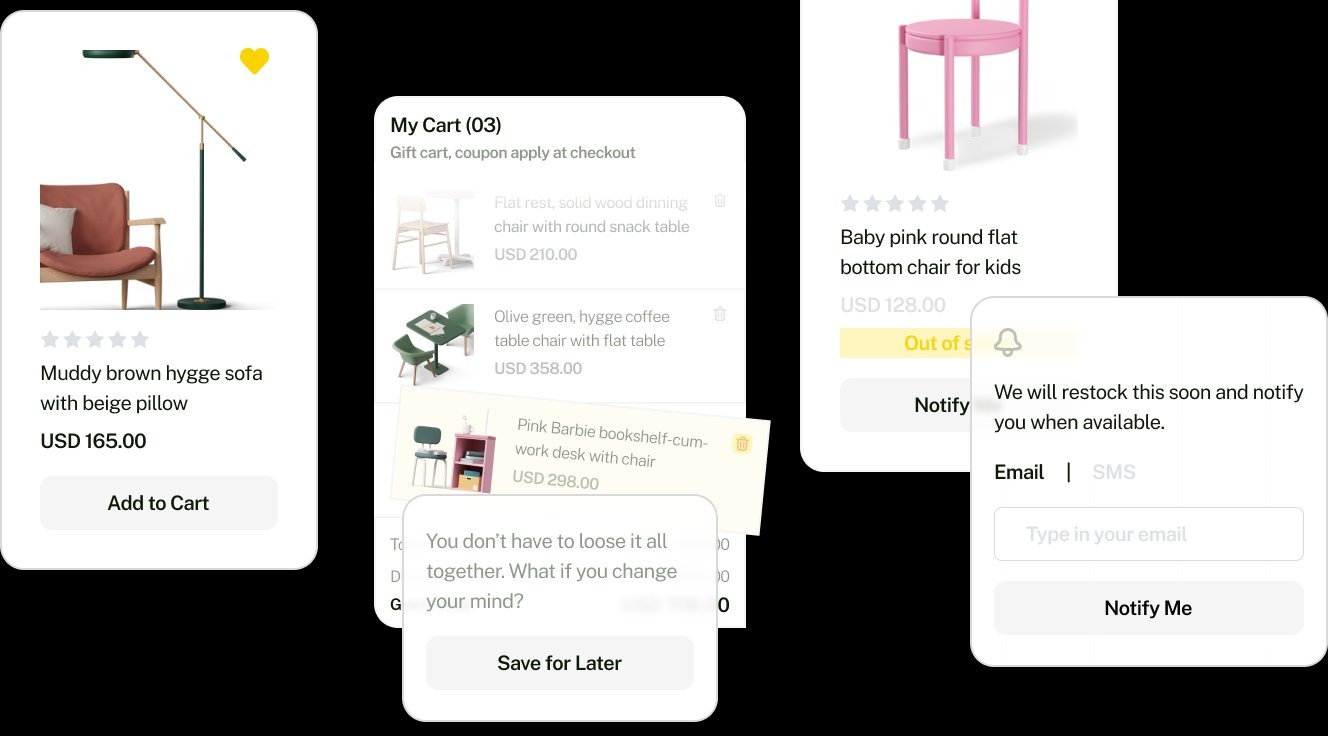
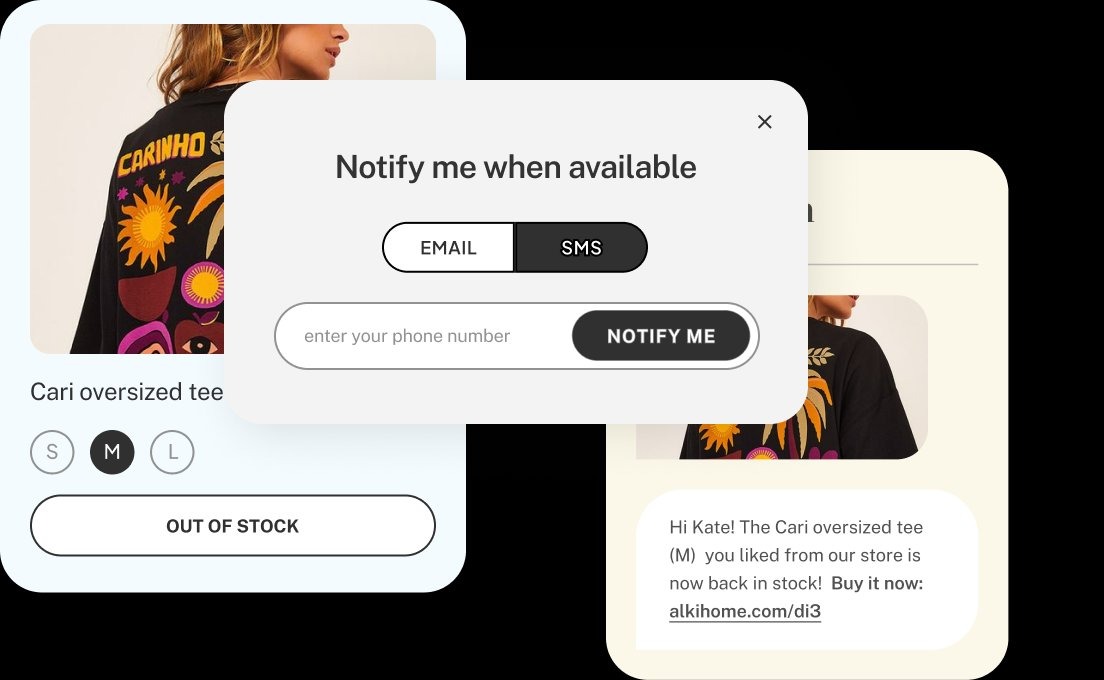
Back-in-stock alerts activate when inventory for a saved or subscribed item becomes available again. The shopper already declared interest when the product was out of stock. You're not interrupting them with a guess about what they might want. You're fulfilling a request they explicitly made.
Price drop notifications work the same way but with a different trigger condition. A shopper who saved an item at full price receives an automated alert when it goes on sale. You're not running a blanket promotion that erodes margin across your entire catalog. You're targeting a known high-intent audience with a personalized offer that moves them from consideration to purchase.
Wishlist reminders act as a gentle nudge for shoppers who saved items but haven't returned in 7, 14, or 21 days. The message is simple: "You still have items waiting." You're helping the shopper pick up where they left off. Customer intent analysis at this stage involves testing reminder cadences, subject lines, and offer inclusion to optimize activation rates without creating unsubscribe fatigue.
The outcome is measurable. Swym merchants recovered $1.14 billion in revenue in 2025 by activating captured intent through these automated triggers.
Where Purchase Intent Data Lives (And How to Access It)
Purchase intent isn't a single data point. It's distributed across three layers of customer information.
First-party behavioral data comes from observing how shoppers interact with your site. Product views, session duration, scroll depth, and navigation patterns all contribute to an implicit understanding of interest. This data is abundant but noisy. A long session could indicate deep research or distracted browsing. You need volume to identify patterns.
Contrary to First-Party, Zero-party declarative data is volunteered directly by the shopper. Wishlist saves, alert subscriptions, list names, stated preferences, and quiz responses are all examples. This data is sparse but precise. When a shopper explicitly tells you they want a restock notification for a specific product variant, there's no ambiguity.
Understanding where do you get your purchase intention from requires recognizing that zero-party data is the only source that survives privacy restrictions and platform changes. It's owned by you, consented to by the shopper, and immune to iOS updates or cookie deprecation.
Transactional data includes past purchases, average order value, purchase frequency, and category affinity. This data is backward-looking but predictive of future behavior. A shopper who buys running shoes every six months is likely to be in-market again on a predictable cycle. Intent derived from transactional history allows you to anticipate needs before the shopper expresses them.
The gap most brands face is unification. These three data layers often live in separate systems: behavioral data in Google Analytics, declarative data in a wishlist app, and transactional data in Shopify. Without a unified view, you're analyzing fragments instead of journeys. Customer intent becomes actionable only when these layers merge into a single shopper profile that updates in real time across all touchpoints.
Converting Purchase Intent Into Revenue
Captured intent only generates revenue if it's acted upon. The activation layer is where infrastructure becomes outcome.
Onsite personalization shows saved items prominently on return visits. When a shopper logs in or resumes a session, their wishlist appears in a persistent sidebar or as a dedicated section on the homepage. You're not asking them to remember what they were researching three days ago. You're restoring the exact context they left behind. This reduces cognitive load and accelerates time to purchase.
Email and SMS automation triggers alerts based on restock, price changes, or time decay. These are not batch-and-blast campaigns. They're individualized messages sent to specific shoppers about specific products at specific moments of inventory or pricing change. The personalization is embedded in the data structure, not tacked on with a merge tag. Intent data flows directly into your ESP or SMS platform, allowing you to build segments and workflows that activate automatically when conditions are met.
Paid media suppression excludes high-intent shoppers from expensive prospecting campaigns. If someone already saved five items to their wishlist, they don't need a Facebook ad introducing them to your brand. Move them into a lower-cost retention flow and reallocate that ad spend to genuinely cold audiences. This is sales intent data being used defensively to reduce waste rather than offensively to drive conversions.
The outcome is margin improvement, not just revenue growth. You're shifting spend from acquisition to activation, which means lower customer acquisition cost and higher lifetime value. A customer intent platform that integrates with Klaviyo, Attentive, Meta Ads, and Shopify POS creates closed-loop activation where intent captured on one channel triggers action on another. The infrastructure becomes invisible to the shopper but critical to the merchant's unit economics.
Brands that execute this well see 15% to 25% higher average order value from shoppers who engage with intent-capture features. That's not because they're selling more expensive products. It's because shoppers who curate lists naturally build larger baskets at checkout. They've already done the work of selecting complementary items. When they're ready to buy, they convert on multiple products at once.
Learning how to turn window shoppers into buyers is less about persuasion tactics and more about infrastructure that preserves and activates the intent they've already expressed.
Purchase Intent in B2B vs. B2C Commerce
Intent looks different in B2B contexts, but the underlying logic is identical. Explicit actions predict future purchases.
B2B buying cycles are longer, often spanning 6 to 12 months from initial research to signed contract. Decision-making is multi-stakeholder, which means intent signals must be tracked at both the individual and account level. A procurement manager might save a product to their personal list, but the final purchase requires approval from finance and operations. B2B buying signals include quote requests, catalog saves, account-level wishlist sharing, and repeat bulk orders.
The challenge is attribution. In B2C, a single shopper typically makes the purchase decision. In B2B, you're tracking intent across multiple users within the same organization, each with different roles and concerns. A site visit from the engineering team looks different from a visit by the CFO. B2B intent data requires account-based tracking that rolls up individual actions into a unified company profile.
Buying intent keywords differ between the two models. B2C shoppers search for product names, colors, and sizes. B2B buyers search for specifications, compliance certifications, bulk pricing, and delivery timelines. The language is transactional and technical rather than emotional and aspirational.
Company buying signals also include RFP submissions, demo requests, and free trial activations. These are high-intent moments where the buyer has moved from passive research to active evaluation. Capturing these signals requires integration between your commerce platform and your CRM so that intent flows seamlessly from marketing to sales.
The same activation principles apply. Trigger restock alerts when bulk inventory becomes available. Send price change notifications when contract pricing updates. Provide account-level dashboards where procurement teams can manage shared lists and reorder frequently purchased items with one click. The infrastructure is the same. The use case is adapted to the buying process.
Purchase Intent with Swym
Treating purchase intent as infrastructure rather than a tactic requires purpose-built capture and activation mechanisms.
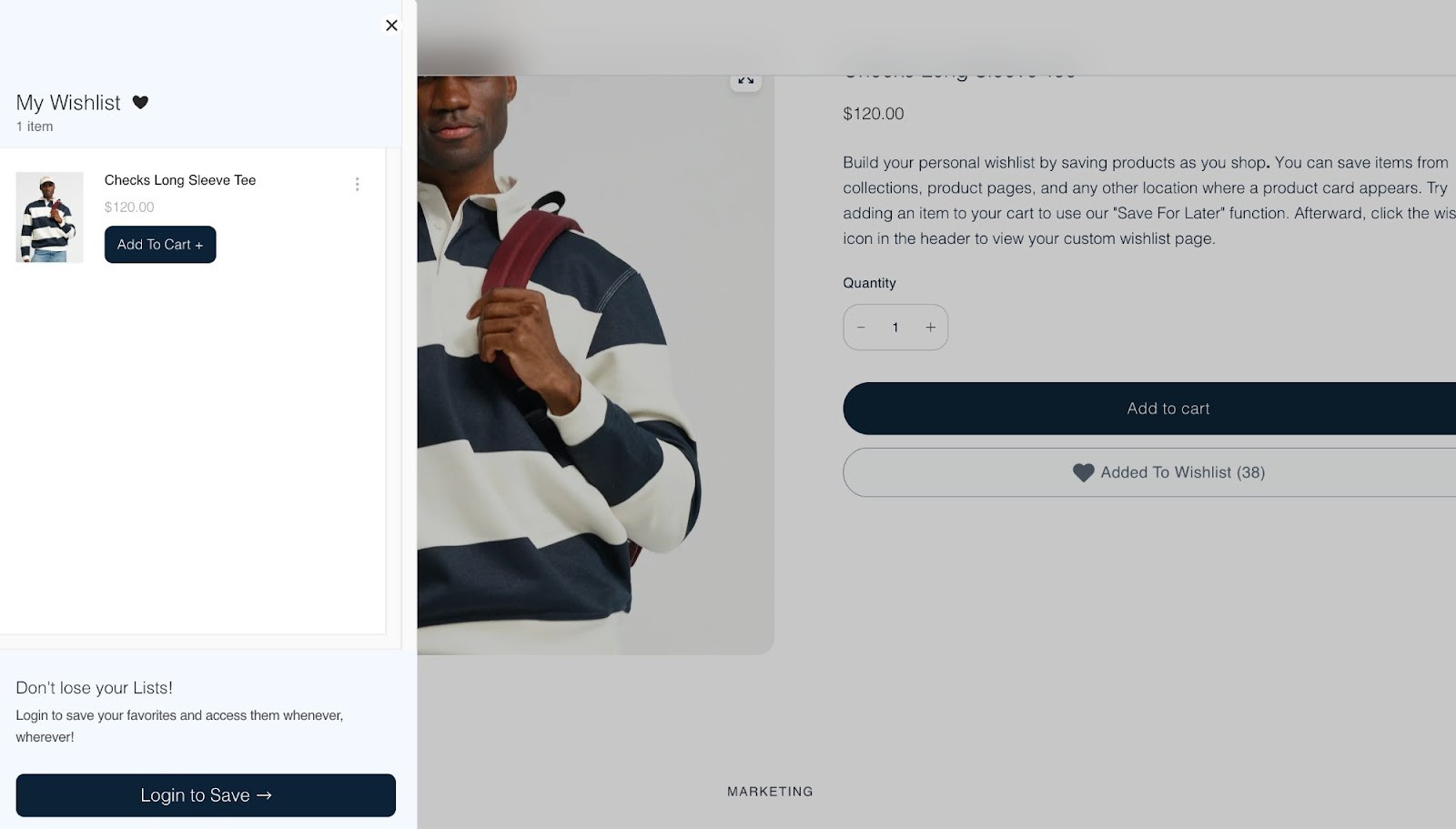
Swym operates as the intent layer for Shopify merchants, turning browsing signals into durable revenue triggers. Wishlist tools to capture purchase intent like Wishlist Plus allow shoppers to save and share favorite items, syncing their preferences across devices and sessions. The saved data flows into automated workflows that trigger back in stock alerts, price drop notifications, and wishlist reminders without requiring manual campaign setup.
Cross-device sync preserves intent across the entire journey. A shopper who saves items on mobile during their morning commute can access the same list on desktop at work or via Shopify POS when they visit your physical store. The context never resets. The friction of starting over is eliminated.
Swym runs as a seamless extension of your existing tech stack, plugging into Klaviyo for email automation, Attentive for SMS workflows, and Meta Ads for audience suppression. Intent data captured onsite flows directly into your marketing channels, creating closed-loop activation without data silos or manual exports.
Capture the Products your Shoppers Truly Love
Swym Wishlist Plus lets shoppers save products they love, ensuring valuable customer intent is never lost and ready to convert.


.png)